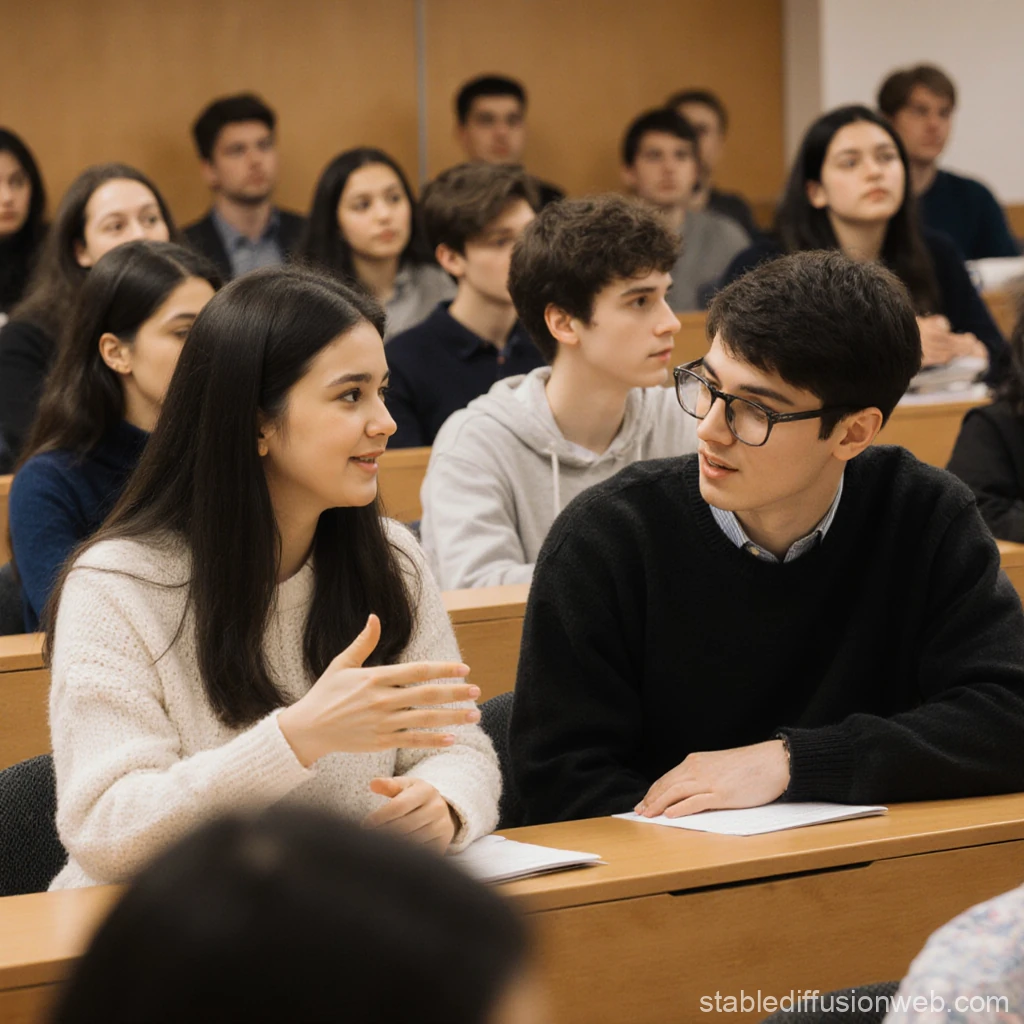
Tutor: Okay, everyone. Get into pairs and look at the innovative environmental solutions we've been reading about this week. Discuss some of the pros and cons of each one.
Dominic: You want to work together, Ella?
Ella: Sure, Dominic. Which solution do you wanna look at first?
Dominic: I think the supermarket garden project's interesting.
Ella: That's where the supermarket grows fruit and vegetables in the store and sells them.
Dominic: Yes. Understandably, only a few shops have decided to adopt this idea. It's hard to set up.
Ella: What's the reaction from customers?
Dominic: Well, of course, they love the idea. One thing I didn't expect though...
Ella: What was that?
Dominic: 1The idea is hugely popular with local chefs, and many of them are finding new ways to use the plants in all their different stages of growth.
Ella: I see. I found the solar car park idea to be really practical.
Dominic: I know what you mean. Putting solar panels on the roofs of car parks to generate electricity might be a cost effective way to power a whole shopping center.
Ella: 2The difficulty could be finding space to put all the panels. Some smaller shopping centers probably don't have covered car parks.
Dominic: That's right. It's a shame because the technology seems to be all there and ready to go if the conditions are right.
Ella: What do you think of the wildlife crossing solution? You know, when a bridge or a tunnel is built over or under a major roadway so that animals can cross.
Dominic: That idea has become very popular and has so many benefits. A lot of research has been done, hasn't it?
Ella: Yes. It's not surprising that the data reveals a huge drop in the number of road accidents in areas where there are wildlife crossings. That's one of the predicted outcomes.
Dominic: Something I read about in the research, which I'd never considered before, was how the animal populations in these areas are affected. Naturally, more of them survive, but because their habitat is not interrupted too much by the roads, 3the genetic diversity of local species has improved.
Ella: That's true. It's worth the huge cost of building them if the result is a win-win for people and animals. I found the a 100% renewable energy campaign, like solar and wind energy, to be really impressive.
Dominic: 4Yes. It's not so much the size of the movement. I mean, only a few countries are involved. It's the amount of support offered once a community joins.
Ella: Considering the sheer amount of time and planning it takes for a city to convert completely to renewables, the organizers of the movement would need to do that. Did you read about carrot mobbing as an environmental movement?
Dominic: What's that?
Ella: It's where huge numbers of people learn through the Internet about where to shop at stores that use the profits to support environmental projects.
Dominic: So they stop buying products that aren't eco friendly, like a boycott?
Ella: No. Actually, it's the opposite of that. 5It allows businesses to fund initiatives to help protect the environment by boosting their profiles. It's a pity that most participants don't get to know each other personally. It's all through online notices.
Tutor: Now, everyone, let's look at one particular environmental innovation, aerial reforestation. With your partner, discuss the process involved in this idea.
Ella: So aerial reforestation is where they drop mixtures from plains to sow vegetables, grains, or trees, and so on in areas that might be hard to reach. Let's see. What are the steps?
Dominic: 6Well, the first step is choosing the right area. Whatever size land you're working on, ensuring there's enough light is crucial.
Ella: 7The next step, whatever you're planting, is to make sure you have the right seeds.
Dominic: To give them a better chance against the competition from other plants, you need to use a lot.
Ella: 8So then you make a mixture with decent quality durable compost for nourishment.
Dominic: Then do they infuse it with insecticide?
Ella: 9That's not necessary in this model. The next step is pressing the whole thing into a small chunk of clay to make a ball. This may then be covered in an outer material such as paper.
Dominic: 10Right. That way, when it lands, it will add balanced nutrients to the mixture.
Ella: Yes. And it may also protect it from insects and other plants.
Dominic: So a few days before they release it from the plane onto the land below, the final step is dipping it in water, just enough to get the germination process started.
Ella: Yes. And after that.....
![[Forecast Q2-2025] - Biology lecture](https://static.helik.app/reading/8fd3d7d2-ccf9-47a3-8920-2e7a3b0d6607)
![[Forecast Q2-2025] - Living in the City](https://static.helik.app/reading/1a60bcf3-f3a7-4e9b-97a2-94d156a0de3b)
![[Forecast Q2-2025] - Student Union](https://static.helik.app/reading/fb443123-8c1d-447e-8c79-5a01650f4754)
![[Forecast Q2-2025] - Fruit-picking Job in an Orchard](https://static.helik.app/reading/e1968346-6c55-44ae-b8d3-f6a4fb7207b9)
![[Forecast Q2-2025] - University Crime Prevention](https://static.helik.app/reading/bdda593e-16d6-4c72-8a12-b116e917b27c)
![[Forecast Q2-2025] - Business Course](https://static.helik.app/reading/3308e282-99a6-4bcb-9d22-0b488701d968)
![[C20T1] - Choosing a restaurant](https://static.helik.app/reading/e9b21123-c43c-42fb-88b7-5d0be3a37e03)
![[Helik Collect] - Car Club Scheme](https://static.helik.app/reading/6a749ba0-4cde-47fe-8260-f65b0599c3bf)