Answers For [Helik Collect] - From princes to paupers: how Goya's portraits tell the story of Spain
Answers and detail explain for [Helik Collect] - From princes to paupers: how Goya's portraits tell the story of Spain
Explain
[Helik Collect] - From princes to paupers: how Goya's portraits tell the story of Spain
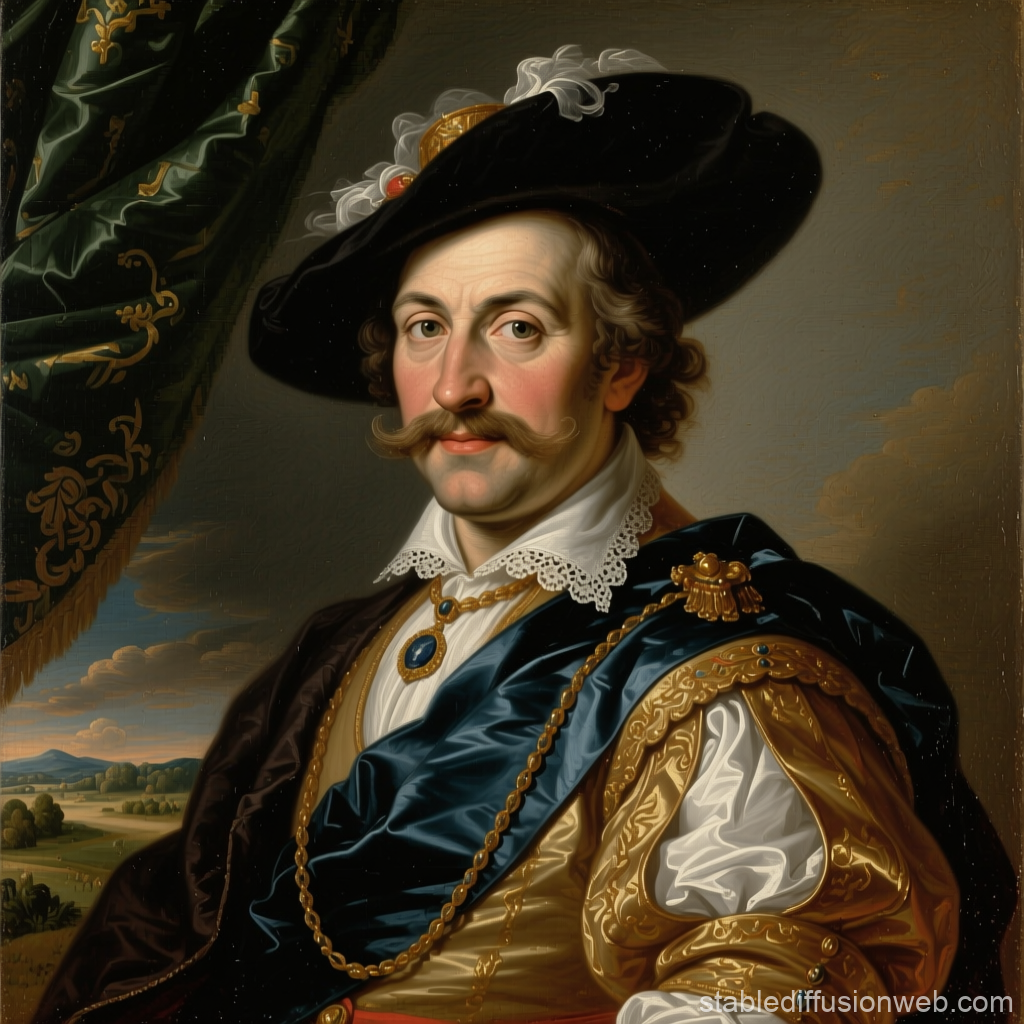
A. There are, according to current scholarship, 160 existing portraits by Francisco de Goya - about a third of his painted output. The real number, though, is much greater since there are no pure landscapes in Goyas work, in that everything he ever painted deals with people. In the work of no other great portraitist are a nations people, history, traumas, folk traditions, and superstitions so comprehensively and relentlessly captured. His subject was a good one in that Goya lived in interesting times: his lifetime was a period that saw Spain pass through the effects of the French Revolution, the Napoleonic wars, and the restoration of the monarchy. It was ruled by a succession of authoritarian and liberal governments, and was simultaneously marked by the Enlightenment. 2But his work together - the public and private paintings, the personal drawings and sketches, and the unsettling and sinister etching series - and what you have is a portrait in the round of Spain itself.
B. His work as a portraitist has its origins in the 45 tapestry cartoons he painted after he moved to Madrid in 1775. 7Although his designs don't show portraits, they do show types - the majos and majas who gave Madrid its street swagger, peasants and rich men, courting couples, singers, hunters, children, and young men and women playing blind mans buff or tossing a mannequin into the air. The pictures have a light, rococo palette and the faces are individualised without being those of individuals. 5-9But in them, Goya practised poses and groupings and a way of handling light on and around figures that was to be invaluable.
C. 8The tapestry designs also show social roles rather than the people inhabiting them, but when it came to painting portraits proper, Goya would turn this on its head. His greatest strength as a portraitist is that regardless of the status of the sitter, be they a king and queen, the Duke of Wellington, or a doctor or writer, it was the person he showed first and their position second. It was this trait, most apparent in his royal portraiture, that has led him to be seen as satirising the Bourbon monarchy rather than as a painter who depicted what he saw without showing obeisance to the usual flattering conventions. 11In Robert Hughess phrase, he did not pay reflexive homage to authority but instead walked a fine line between respect and truth.
D. 10Goyas success was rapid; in 1785 he was made deputy director of painting at the Royal Academy, (his main message to his students was subversive - there are no rules in painting) and in 1786 became pintor de cámara, required to paint works required for royal service. 1-10He immediately spent some of his 15,000-reales salary on a two-wheeled gig (one of only three in Madrid) which he promptly crashed on his first outing. 10His amour propre untouched, he wrote to his childhood friend Martín Zapater: I have now established an enviable way of living: I do not wait on anyone in antechambers, and if anyone wants anything from me they must come to me; I have made myself more in demand and unless it is a person of rank or at the request of a friend I would do nothing for anyone...
E. 4Part of the reason for his success was that, unlike Gainsborough, for example, he did not resent portraiture as an economically necessary chore that ate away at the time he could devote to higher art. He embraced the genre as a means of exploring human character. This genuine interest allowed him to penetrate the facade of his sitters, capturing not just their likeness, but their psychological state. His portraits from the 1790s, particularly of the royal family, are masterpieces in this approach. He presented them with a stark realism that was unprecedented, grouping them in a way that highlighted their familial dynamics and individual personalities, however flawed or ordinary they might appear.
F. This commitment to psychological truth became even more pronounced following his near-fatal illness in 1793, which left him deaf. Isolated from the world of sound, Goyas focus turned inwards, and 12his work grew darker and more introspective. 3The light rococo tones of his tapestry cartoons gave way to a richer, somber palette and a dramatic use of chiaroscuro. 12His portraits from this period, such as those of the Duchess of Alba, are charged with a complex mixture of intimacy, mystery, and power. The line between observer and subject seemed to dissolve, as Goya used the portrait not for public glorification but as a form of private, almost philosophical, inquiry.
G Ultimately, Goyas career traces the arc of Spains tumultuous age. The enlightened optimism of his early court paintings gradually soured into a profound disillusionment vividly recorded in his later, so-called Black Paintings. 6-13These murals, painted directly onto the walls of his country house, are a far cry from the formal portraits of princes and dukes. They depict haunting, mythological scenes and grotesque figures, reflecting the despair and chaos of a nation ravaged by war and repression. 6In this final phase, the portrait of Spain was no longer found in the faces of individuals, but in the tormented soul of its people.
Questions 1-6
The reading passage has seven paragraphs, A-G.
Which paragraph contains the following information?
Write the correct letter, A-G, in boxes 1-6 on your answer sheet.
You may use any letter more than once.
1
1
A description of a personal purchase that ended in an accident.
2
2
The reason why Goyas body of work provides such a complete representation of his country.
3
3
A contrast between Goyas early work and his later, more mature style.
4
4
An explanation of why Goya was able to be so successful as a portrait painter.
5
5
Reference to a specific artistic technique that Goya developed in his early career.
6
6
The claim that Goyas final works moved away from depicting specific people.
Questions 7-9
Complete the summary below. Choose NO MORE THAN TWO WORDS from the passage for each answer. Write your answers in boxes 7-9 on your answer sheet.
Goyas Tapestry Cartoons
Before becoming a renowned portraitist, Goya created designs for tapestries after moving to Madrid. These cartoons did not feature true 7 (portraits) , but instead depicted various social 8 (roles) . The artistic style of these works was light and rococo, and while the faces were distinctive, they were not of specific, identifiable people. However, these early projects were crucial as they allowed Goya to practise arranging figures and mastering the effect of 9 (light) on his subjects.
|
Questions 10-13
Do the following statements agree with the claims of the writer in Reading Passage 2?
In boxes 10-13 on your answer sheet, write:
TRUE if the statement agrees with the information
FALSE if the statement contradicts the information
NOT GIVEN if there is no information on this
10
10
Goya believed that his teaching role at the Royal Academy was more important than his work for the royal family
11
11
Robert Hughes believed that Goya balanced respect and truth in his portraits of authority figures
12
12
Goyas illness directly caused him to change his subject matter from portraits to landscapes.
13
13
The Black Paintings were originally intended for public display
![[Recent Tests- VOL] - A Brief Introduction to Pepper](https://static.helik.app/reading/2250f746-b094-476e-a25e-a47a21c27072)
![[Recent Tests- VOL] - Classifying societies](https://static.helik.app/reading/e93c3418-dcc0-4095-96eb-ee3951a68289)
![[Recent Tests- VOL] - The Blockbuster Phenomenon](https://static.helik.app/reading/2f76f74f-39e0-45b8-8c43-ff5bac22ee2b)
![[Recent Tests- VOL] - Saving the Bittern](https://static.helik.app/reading/4f428d53-643b-477c-afb1-d6f0cee2e8fb)
![[Recent Tests- VOL] - Ambergris](https://static.helik.app/reading/b6be70ec-fa99-41ea-876e-4058cfbab0cd)
![[Recent Tests- VOL] - Developmental Tasks of Normal Adolescence](https://static.helik.app/reading/69287e43-4020-4dea-9c3e-54bc2c48bab8)
![[Recent Tests- VOL] - Corporate Social Responsibility](https://static.helik.app/reading/4034faff-df5e-4727-af9c-fe17355ea7eb)
![[Recent Tests- VOL] - Amateur Naturalists](https://static.helik.app/reading/9177a84f-590c-4379-b00a-5c18b76c217d)